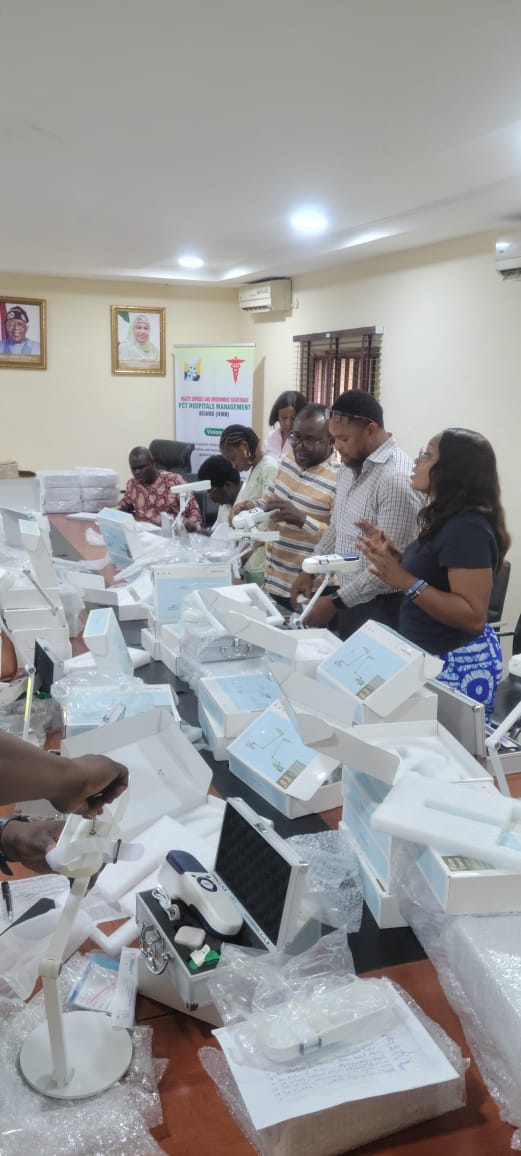
Patients requiring intravenous treatment at government hospitals in the Federal Capital Territory may now experience fewer needle pricks as the FCT Administration has distributed 48 vein-finding devices to hospitals under its Hospitals Management Board.
The equipment, along with supporting accessories, has been allocated to the 14 secondary healthcare facilities managed by the board as part of efforts to improve service delivery and enhance patient care.
The Senior Special Assistant to the FCT Minister on Public Communications and Social Media, Lere Olayinka, said the devices were provided through the FCT Minister, Nyesom Wike.
According to the statement, the Mandate Secretary of the Health Services and Environment Secretariat, Dr. Adedolapo Fasawe, described the equipment as vital to healthcare delivery, noting that the devices would improve the accuracy and efficiency of procedures requiring access to patients’ veins.
The statement quoted the Mandate Secretary saying that, “Vein finders assist healthcare professionals in locating veins for intravenous (IV) cannulation and insertion, facilitating blood sample collection (venipuncture), reducing multiple needle attempts, and improving access to veins in patients with difficult venous anatomy, particularly children, elderly persons, and obese patients.”
The machines, the statement explains, “will make it easy to access a patient’s vein in a quick, painless manner. It will also make it possible for newly trained doctors to set up intravenous access without multiple needle pricks especially for children, thereby making hospital visits less traumatic for patients.
“The devices will also help assess superficial vein patterns and contribute to greater clinical efficiency and accuracy.”
To ensure effective use of the equipment, healthcare personnel from the beneficiary hospitals underwent practical training on the operation, application and maintenance of the devices.
The training, according to the statement, focused on proper handling of the vein finders and their accessories to ensure their sustainability and optimal use across the hospitals.
The FCTA said the intervention forms part of ongoing efforts to strengthen healthcare services through the deployment of modern medical technology and improved support for healthcare workers across public health facilities in the territory.